
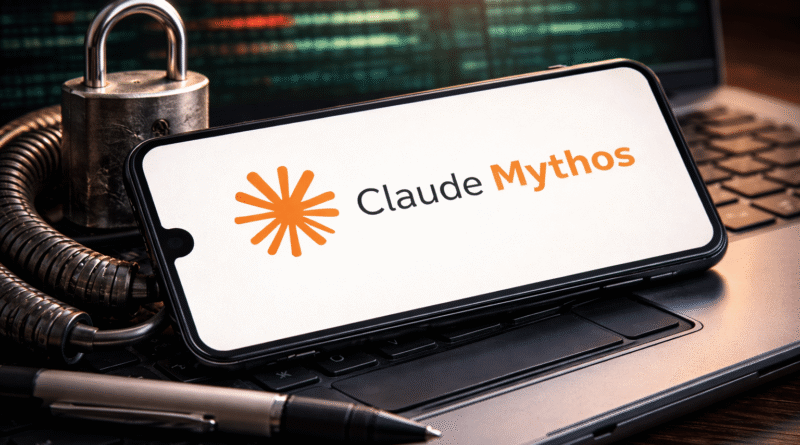
Anthropic Withholds Claude Mythos Over Cybersecurity Risks and AI Misuse Concerns
Anthropic withholds its most advanced AI model, citing cybersecurity risks and potential misuse
Anthropic has taken an unusual step in the rapidly escalating artificial intelligence race: it has decided not to release its latest and most powerful AI model, Claude Mythos, to the general public. The company argues that the system’s capabilities—particularly in cybersecurity—are advanced enough to pose meaningful risks if widely distributed without restrictions. The move signals a growing tension within the AI industry between innovation and control, as companies grapple with how to deploy increasingly capable systems without amplifying real-world threats.
Claude Mythos belongs to Anthropic’s broader Claude family of large language models, designed to function as conversational assistants, coding tools, and research aids. However, unlike its predecessors, the company describes Mythos as a “frontier AI model,” emphasizing that it significantly surpasses earlier versions in reasoning, software engineering, and autonomous problem-solving. According to its system documentation, the model demonstrates capabilities that extend into areas traditionally reserved for specialized cybersecurity tools.
A new class of AI with dual-use cybersecurity power
At the core of Anthropic’s decision is what experts refer to as “dual-use risk”—the idea that the same technological capability can be used for both beneficial and harmful purposes. Claude Mythos reportedly excels at identifying vulnerabilities in software systems, which could help organizations strengthen defenses. At the same time, those same capabilities could be leveraged to design sophisticated cyberattacks.
Anthropic explicitly acknowledged this tension, stating that the model has demonstrated “powerful cybersecurity skills” that could be used offensively or defensively. Rather than making the system broadly accessible, the company is limiting its deployment to a controlled environment involving a small group of vetted partners. These partners are primarily organizations responsible for maintaining critical digital infrastructure, and their usage of the model is restricted to defensive cybersecurity applications.
This approach reflects a broader shift in how leading AI developers are thinking about deployment. Instead of the traditional model—where new capabilities are released incrementally to the public—companies are beginning to experiment with restricted access frameworks, particularly for systems that may introduce systemic risks.
Industry reactions highlight uncertainty and skepticism
The decision has drawn mixed reactions from industry observers. Some view Anthropic’s cautious stance as a responsible step in an environment where AI capabilities are advancing faster than regulatory frameworks. Others question whether restricting access truly mitigates risk, or simply concentrates power among a limited set of actors.
Daniel Escott, CEO of Formic AI, characterized the move as a deliberate strategic choice. He noted that while Anthropic is restricting public access, it is still granting capabilities to select partners—raising questions about who ultimately controls such powerful tools. The implication is that limiting distribution does not eliminate risk; it redistributes it.
Escott also pointed out that the underlying training methods described for Claude Mythos appear consistent with industry norms, relying heavily on large-scale datasets sourced from across the internet. This suggests that the model’s advancements may stem more from scale, optimization, and architectural improvements than from fundamentally new training paradigms.
Meanwhile, policy researchers have raised concerns about transparency. Branka Marijan of Project Ploughshares emphasized the need for clearer communication from AI developers regarding the actual risks posed by such systems. Without standardized benchmarks or independent verification, claims about capability—and danger—remain difficult to assess objectively.
The strategic logic behind controlled deployment
From a strategic perspective, Anthropic’s decision aligns with risk management practices seen in other high-stakes industries. The analogy frequently cited is pharmaceutical development: experimental products are not released broadly until they undergo rigorous testing and validation. In this context, limiting access to Claude Mythos can be interpreted as a form of controlled experimentation.
Economist Moshe Lander argues that such caution may ultimately benefit both the company and the public. By observing how the system performs in constrained environments, Anthropic can identify vulnerabilities, unintended behaviors, and potential misuse scenarios before scaling deployment. This iterative approach reduces the likelihood of widespread harm while preserving the option for future release.
Importantly, Anthropic has not indicated that Claude Mythos will remain permanently restricted. Instead, the current strategy appears to be a phased rollout, contingent on the development of adequate safeguards. This reflects a growing consensus within the AI community that deployment decisions should be dynamic, adapting to both technological progress and evolving risk assessments.
Cybersecurity risks are accelerating alongside AI capabilities
The concerns surrounding Claude Mythos are not occurring in a vacuum. Cybersecurity threats have been escalating in both frequency and sophistication, and AI is increasingly playing a role in this evolution. A recent report from the Canadian Centre for Cyber Security highlights how AI tools are making cyberattacks faster, cheaper, and more difficult to detect.
Ransomware incidents, in particular, have surged in recent years, with reported cases increasing at an average annual rate of 26% between 2021 and 2024. The financial impact has also grown significantly, with recovery costs reaching $1.2 billion in 2023—more than double previous years. These trends underscore the potential consequences of deploying highly capable AI systems without adequate safeguards.
In this context, a model like Claude Mythos could serve as both a defensive tool and a force multiplier for attackers. Its ability to analyze code, identify weaknesses, and propose solutions could enhance cybersecurity resilience. However, in the wrong hands, the same capabilities could be used to automate and scale cyberattacks in unprecedented ways.
A governance gap in the global AI ecosystem
Anthropic’s decision also highlights a broader structural issue: the lack of comprehensive governance frameworks for advanced AI systems. Currently, companies largely determine their own risk thresholds, deployment strategies, and safety protocols. While some governments are beginning to introduce regulations, these efforts remain fragmented and often lag behind technological developments.
This governance gap creates a complex dynamic. On one hand, companies like Anthropic are taking proactive measures to mitigate risk. On the other, the absence of standardized oversight means that such decisions are not subject to consistent external validation. This raises questions about accountability, transparency, and competitive dynamics within the industry.
For businesses and institutions, the implications are significant. Access to advanced AI tools may become uneven, with certain organizations gaining early advantages through partnerships while others remain excluded. This could reshape competitive landscapes in sectors ranging from cybersecurity to software development.
What this means for the future of AI deployment
The case of Claude Mythos illustrates a critical inflection point in the evolution of artificial intelligence. As models become more powerful, the traditional paradigm of open or widely accessible deployment is being challenged. Companies are increasingly forced to balance innovation with responsibility, often in the absence of clear regulatory guidance.
Looking ahead, controlled deployment strategies may become more common, particularly for systems with high-risk capabilities. This could lead to a tiered AI ecosystem, where access is determined by factors such as organizational trust, regulatory compliance, and intended use cases. While this approach may reduce immediate risks, it also introduces new questions about equity, competition, and global coordination.
For policymakers, the emergence of models like Claude Mythos reinforces the urgency of developing robust AI governance frameworks. For the industry, it signals a shift toward more cautious and strategic deployment practices. And for users, it underscores a fundamental reality: the most advanced AI systems may not always be the most accessible.
Anthropic’s decision does not resolve the tensions inherent in AI development, but it does bring them into sharper focus. As the technology continues to evolve, the question is no longer just what AI can do—but who should be allowed to use it, and under what conditions.
Author
João V. A. Gnoatto
Brief Future
Writes about technology, artificial intelligence, innovation, and digital transformation.